

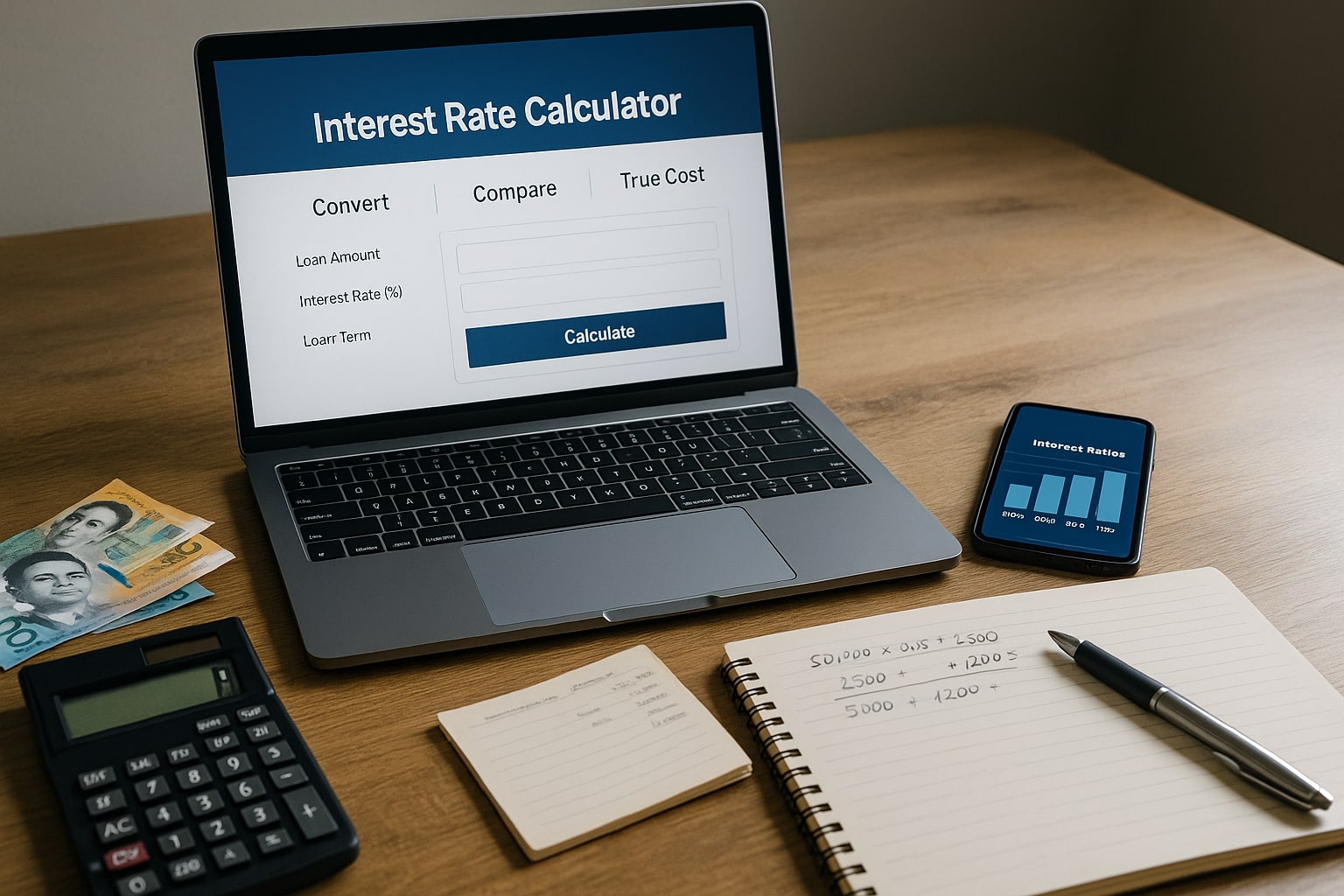
Interest rates are at the heart of every loan, whether you’re applying for a salary loan, personal loan, or pautang online in the Philippines. Yet most borrowers only look at the monthly payment without realizing how interest, fees, and loan terms affect the true cost of borrowing.
- What is an Interest Rate Calculator?
- Why Filipinos Need an Interest Rate Calculator
- Key Factors That Affect Interest Rates
- Example – Interest Rate Calculator in Action
- How to Use an Interest Rate Calculator Effectively
- Flat vs. Effective Interest Rate – What You Must Know
- Common Mistakes Borrowers Make
- Tips to Lower Your Loan Interest
- FAQ – Interest Rate Calculator in the Philippines
- What is the purpose of an interest rate calculator?
- Can I use it for both bank and online loans?
- What’s the difference between flat and effective rates?
- Why does my take-home cash look smaller than the loan amount?
- Can a calculator guarantee my loan approval?
- Do lenders in the Philippines use the same interest format?
- Is there a free interest rate calculator online?
- Conclusion
An interest rate calculator makes it easy to see beyond the advertised numbers. It shows the real cost of your loan, helps you compare different lenders, and even uncovers hidden charges. Instead of doing complex math, you can instantly know if an offer is truly affordable.

What is an Interest Rate Calculator?

An interest rate calculator is a simple online tool that converts percentages into actual peso amounts. It gives you a clear picture of:
- Your monthly payment based on loan amount and interest
- The total cost of borrowing, including fees
- How interest changes when you extend or shorten the term
- The difference between flat rate and effective interest rate (EIR)
It’s not just about numbers. The calculator helps you avoid utang traps and make smarter financial choices.
Why Filipinos Need an Interest Rate Calculator
Hidden Fees and Charges
Many borrowers only notice the deduction after loan release. A calculator helps you prepare for take-home cash vs. repayment cost.
Flat vs. Effective Rates
Some lenders advertise low “flat” interest but the effective rate is much higher. A calculator exposes this difference.
Better Loan Comparisons
With dozens of banks, cooperatives, and online apps offering loans, a calculator lets you compare apples to apples.
Avoiding Overborrowing
By knowing the repayment schedule in advance, you can borrow only what you can realistically pay back.

Key Factors That Affect Interest Rates
Loan Type
- Salary loan / payday loan → higher interest, short terms
- Personal loan from banks → lower rates but stricter approval
- Online lending apps → fast approval, but high monthly charges
Loan Term
- Short-term → higher monthly but lower overall cost
- Long-term → smaller monthly but bigger total repayment
Lender Type
- Banks often have annual rates of 20–30%
- Cooperatives may offer lower rates to members
- Online lenders can charge 5–10% per month
Borrower Profile
Income stability, credit history, and existing debts affect the rate offered to you.
Example – Interest Rate Calculator in Action
| Loan Amount | Interest Rate | Term | Monthly Payment | Total Repayment | Take-Home (after fees) |
| ₱10,000 | 5% monthly | 6 months | ₱1,950 | ₱11,700 | ₱9,500 |
| ₱30,000 | 3% monthly | 12 months | ₱3,300 | ₱39,600 | ₱28,000 |
| ₱50,000 | 2% monthly | 24 months | ₱3,200 | ₱76,800 | ₱46,000 |
👉 Notice: The “headline” rate is not the whole story. Fees and term length change the actual repayment.
How to Use an Interest Rate Calculator Effectively
- Input your desired loan amount (e.g., ₱20,000).
- Choose the loan term (e.g., 12 months).
- Select interest type – flat or effective.
- Check total repayment vs. take-home cash.
- Adjust numbers until you find an amount you can afford.
Flat vs. Effective Interest Rate – What You Must Know
Flat Rate
- Calculated on the original loan amount
- Looks cheaper on paper
- Common with online apps and small lenders
Effective Interest Rate (EIR)
- Calculated on the outstanding balance
- Shows the true cost over time
- Always higher than flat rate
👉 Always check the EIR before signing any contract.
Common Mistakes Borrowers Make
- Believing the advertised rate without checking deductions
- Borrowing the maximum amount instead of what’s needed
- Ignoring fees and insurance costs
- Comparing loans without adjusting for term length
- Not using a calculator before signing papers
Tips to Lower Your Loan Interest
- Apply with a bank or cooperative instead of online apps
- Maintain a good credit record and pay on time
- Borrow only what you need (lower risk = better offers)
- Compare at least 3–4 lenders before deciding
- Negotiate terms if you have a stable income and employment record
FAQ – Interest Rate Calculator in the Philippines
What is the purpose of an interest rate calculator?
It converts percentages into real peso values, showing your payment schedule and total loan cost.
Can I use it for both bank and online loans?
Yes. It works for personal loans, payday loans, salary loans, and cooperative loans.
What’s the difference between flat and effective rates?
Flat is based on the full loan amount; effective is based on the balance. Effective is always the true cost.
Why does my take-home cash look smaller than the loan amount?
Because of deductions such as processing fees, insurance, and taxes.
Can a calculator guarantee my loan approval?
No. But it helps you see if your income can handle repayments, which improves your approval chances.
Do lenders in the Philippines use the same interest format?
No. Some use monthly flat rates, others annual EIR. That’s why a calculator is essential.
Is there a free interest rate calculator online?
Yes. Many financial websites, banks, and loan apps provide free calculators.
Conclusion
An interest rate calculator is not just about numbers — it’s about making better financial decisions. By converting interest into actual peso payments, you can:
- Avoid hidden charges
- Compare lenders fairly
- Borrow only what you can afford
- Improve your loan approval chances
Never sign a loan agreement without running the numbers first. Borrowing without a calculator is like going blindfolded into debt.
👉 Compare the best loan apps in the Philippines →