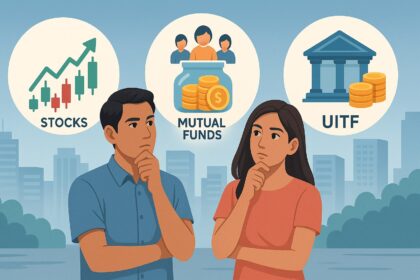


Investing may seem intimidating at first, especially if you’re new to personal finance in the Philippines. Whether you’re an employee saving part of your sweldo (salary), an OFW sending remittances back home, or a young professional trying to grow your money beyond a savings account, investing is a powerful tool to build long-term wealth.
- What is Investing?
- Popular Investment Options in the Philippines
- Beginner’s Investment Strategies
- Risk Management for Filipino Investors
- Where to Learn More About Investing
- FAQ
- What is the minimum amount to start investing in the Philippines?
- Which is the safest investment in the Philippines?
- Can OFWs invest while working abroad?
- Is it better to invest in real estate or stocks?
- What’s the difference between mutual funds and UITFs?
- Can I lose money in investing?
- What investment is best for beginners?
- Conclusion
In this beginner-friendly guide, we’ll explore the basics of investing in the Philippines, the best options available for Filipinos, and how to avoid common mistakes. From stocks and mutual funds to real estate and government bonds, this article will help you understand where to start and how to make smart decisions with your hard-earned pesos.

What is Investing?
Investing means putting your money into financial instruments, businesses, or assets with the expectation that it will grow over time. Unlike saving, which simply stores your money, investing allows your money to work for you and potentially earn higher returns.
Why Filipinos Should Start Investing
- Inflation in the Philippines averages around 3–5% per year. Keeping money only in a savings account means your purchasing power decreases.
- Investments such as UITFs (Unit Investment Trust Funds) or stocks historically outperform savings accounts.
- With early planning, investments can fund your retirement, education, or business goals.

Popular Investment Options in the Philippines
1. Stock Market
- Invest in shares of companies listed on the Philippine Stock Exchange (PSE).
- Potential for high returns but comes with risk due to market fluctuations.
- Best for long-term investors willing to study the market.
Pros: High return potential, dividends.
Cons: High risk, requires knowledge and monitoring.
2. Mutual Funds & UITFs
- Managed by professionals, perfect for beginners.
- You pool your money with other investors and a fund manager allocates investments in stocks, bonds, or mixed portfolios.
Best for: Beginners who want diversification and professional management.
3. Real Estate
- Buying properties for rental income or future resale.
- Popular in Metro Manila, Cebu, and Davao.
- Requires larger capital but often grows steadily in value.
4. Government Bonds
- Issued by the Bureau of the Treasury (e.g., RTB, Premyo Bonds).
- Safe investment option, backed by the Philippine government.
- Ideal for conservative investors.
Beginner’s Investment Strategies
Start Small
You don’t need millions to start investing. Platforms like GCash, COL Financial, and BPI Trade allow you to begin with as little as ₱1,000–₱5,000.
Diversify
Don’t put all your money in one basket. Spread your funds across stocks, bonds, and mutual funds.
Long-Term Mindset
Investing is not a quick way to get rich. The best results come from discipline and consistency over years.
Risk Management for Filipino Investors
| Risk Type | Example | How to Manage |
| Market Risk | Stock price drops | Diversify across industries |
| Inflation Risk | Peso loses value | Invest in assets that beat inflation |
| Liquidity Risk | Property takes time to sell | Keep some cash or bonds |
| Currency Risk | OFW investing in USD, sending peso | Balance FX exposure |
Where to Learn More About Investing
- Websites: PSE Edge, BSP Financial Education Portal.
- Mobile Apps: GCash Invest, COL Financial, Seedbox.
- Communities: Facebook groups, forums on investing, finance YouTube channels.






FAQ
What is the minimum amount to start investing in the Philippines?
You can start with as little as ₱1,000 for mutual funds or UITFs, and around ₱5,000 for stock market accounts.
Which is the safest investment in the Philippines?
Government bonds are considered the safest because they’re backed by the Philippine government.
Can OFWs invest while working abroad?
Yes. OFWs can open investment accounts online, buy bonds, or invest in real estate in the Philippines.
Is it better to invest in real estate or stocks?
It depends on your goals. Real estate offers stability and long-term appreciation, while stocks provide higher growth potential but with more volatility.
What’s the difference between mutual funds and UITFs?
Both pool money from investors, but mutual funds are regulated by the SEC while UITFs are managed by banks and regulated by the BSP.
Can I lose money in investing?
Yes. All investments carry some risk. Proper research, diversification, and risk management reduce the chances of loss.
What investment is best for beginners?
Mutual funds, UITFs, and government bonds are the most beginner-friendly options in the Philippines.
Conclusion
Investing in the Philippines is no longer just for the wealthy. With mobile apps, low initial capital requirements, and a variety of investment options, every Filipino can start building wealth today. The key is to start small, stay consistent, and think long term.
Compare the best loan apps in the Philippines →