

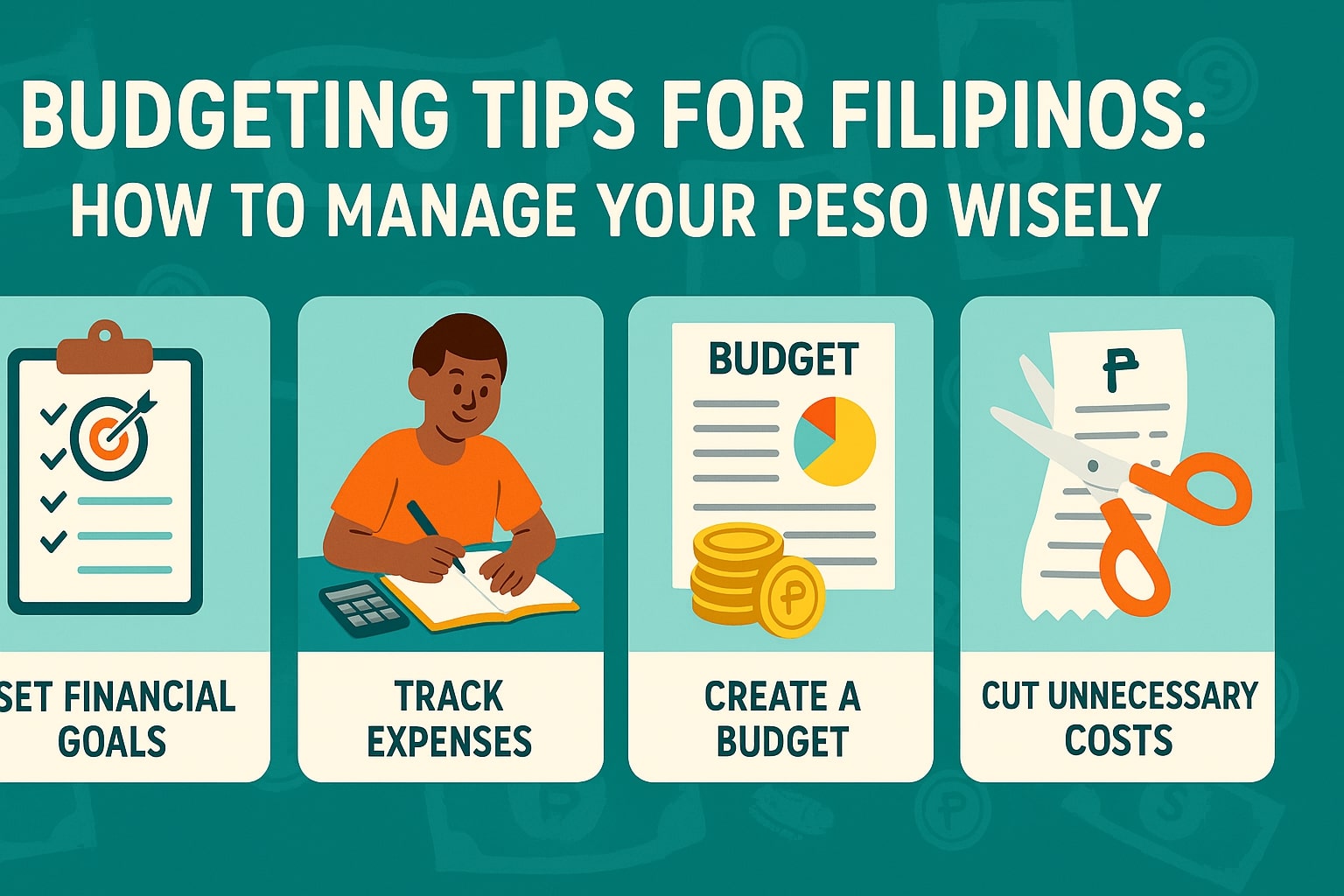
Budgeting is one of the most important financial skills every Filipino must learn. Whether you are an employee receiving a monthly salary, a freelancer getting irregular income, or a small business owner handling daily expenses, managing your peso effectively will help you avoid unnecessary utang (debts) and build a more secure future.
- Why Budgeting Is Important for Every Filipino
- Practical Budgeting Tips for Filipinos
- 1. Follow the 50/30/20 Rule
- 2. Track Every Peso You Spend
- 3. Prioritize an Emergency Fund
- 4. Avoid Lifestyle Inflation
- 5. Limit Debt and Credit Card Use
- 6. Use the Envelope System (Sobre Method)
- 7. Automate Your Savings
- Sample Budget Plan for a Filipino Worker
- Smart Saving Tips for Filipinos
- Common Budgeting Mistakes Filipinos Make
- FAQ – Budgeting Tips for Filipinos
- 1. What is the best budgeting method for Filipinos?
- 2. How much should I save monthly from my salary?
- 3. How can I budget on irregular income (freelancers/OFWs)?
- 4. How do I stop relying on loans and utang?
- 5. What’s the easiest way to start saving money in the Philippines?
- 6. Can budgeting really help me get out of debt?
- 7. Do I need a financial advisor to budget?
- Conclusion
In the Philippines, many people rely on pautang online or quick salary loans when unexpected expenses arise. But without a proper budget, this can lead to a cycle of debt. The good news is that with the right budgeting techniques, you can control your spending, save consistently, and even invest for your future.
This guide will walk you through proven budgeting tips for Filipinos, practical tools you can use, and strategies to avoid common money mistakes.

Why Budgeting Is Important for Every Filipino
Budgeting is more than just tracking expenses—it’s a roadmap for financial freedom. Here’s why it matters:
- Avoiding utang traps – When you live paycheck to paycheck, sudden expenses can force you into debt.
- Reaching savings goals – Whether it’s for education, travel, or buying a house, budgeting helps you set aside money.
- Emergency readiness – A well-planned budget ensures you have funds for medical bills, typhoons, or job loss.
- Less stress – Knowing where your money goes gives you peace of mind.
Practical Budgeting Tips for Filipinos
1. Follow the 50/30/20 Rule
Divide your income into three categories:
- 50% Needs – Rent, utilities, groceries, transportation.
- 30% Wants – Dining out, shopping, entertainment.
- 20% Savings & Debt Repayment – Emergency fund, investments, paying off loans.
This rule works well for fixed-income earners. For freelancers, adjust based on irregular cash flow.
2. Track Every Peso You Spend
The first step to better money management is awareness. Use:
- A simple notebook or envelope system.
- Free budgeting apps (e.g., GCash Money Manager, Mint).
- Spreadsheets with income and expense categories.
Tip: Track your daily expenses like jeepney fare, kape sa tindahan, or load—small costs add up.
3. Prioritize an Emergency Fund
Every Filipino family should have at least 3–6 months’ worth of expenses saved. Start small:
- Save ₱50–₱100 daily.
- Keep it in a separate bank account or digital wallet.
- Don’t touch it unless there’s a real emergency.
4. Avoid Lifestyle Inflation
When you get a salary increase or bonus, avoid upgrading your lifestyle immediately. Instead:
- Add more to savings.
- Pay off outstanding utang.
- Invest in skills or small business ventures.
5. Limit Debt and Credit Card Use
Many Filipinos fall into the trap of relying on credit cards or pautang online. To stay debt-free:
- Use credit cards only if you can pay in full.
- Avoid unnecessary gadgets and luxury items.
- If you must borrow, compare the best salary loans in the Philippines to get the lowest interest.
👉 See our guide on Online Loans for safe borrowing tips.
6. Use the Envelope System (Sobre Method)
Divide your cash into envelopes labeled: rent, groceries, transportation, savings, etc. Once an envelope is empty, you can’t spend more in that category. This traditional Filipino method still works today.
7. Automate Your Savings
Set up automatic transfers from your payroll account to your savings account every payday. This way, you save before you spend.
Sample Budget Plan for a Filipino Worker
Here’s an example of a monthly budget for someone earning ₱20,000:
| Category | % of Income | Amount (₱) |
| Needs (rent, food) | 50% | 10,000 |
| Wants (shopping, etc) | 30% | 6,000 |
| Savings/Debt payment | 20% | 4,000 |
This is just a sample—adjust based on your priorities.
Smart Saving Tips for Filipinos
- Cook at home instead of eating out daily.
- Buy in bulk to save on groceries.
- Use public transport or carpool.
- Take advantage of discounts on Lazada, Shopee, or SM sales.
- Cut subscriptions you rarely use.
👉 Learn more in our Debt Management guide on how to free up money for savings.
Common Budgeting Mistakes Filipinos Make
- Relying too much on utang.
- Not tracking small expenses.
- Ignoring emergency funds.
- Spending bonuses instead of saving.
- Thinking “bahala na” about finances.
FAQ – Budgeting Tips for Filipinos
1. What is the best budgeting method for Filipinos?
The 50/30/20 rule and the envelope system (sobre method) are the most effective and simple methods for Filipino households.
2. How much should I save monthly from my salary?
At least 20% of your monthly income. If that’s too high, start with 5–10% and increase gradually.
3. How can I budget on irregular income (freelancers/OFWs)?
Base your budget on your average lowest monthly income. Save more when you earn extra to cover lean months.
4. How do I stop relying on loans and utang?
Build an emergency fund, cut unnecessary expenses, and explore side hustles like online selling or freelancing.
5. What’s the easiest way to start saving money in the Philippines?
Open a digital bank account (e.g., Maya, GCash) and set automatic savings transfers every payday.
6. Can budgeting really help me get out of debt?
Yes. A structured budget allows you to allocate money for debt repayment while still covering needs and savings.
7. Do I need a financial advisor to budget?
Not necessarily. Free tools, apps, and guides like this article are enough for most Filipinos.






Conclusion
Budgeting is not about restricting yourself—it’s about gaining control over your money. As a Filipino, mastering these budgeting tips will help you avoid unnecessary utang, build savings, and prepare for the future.
Start small today: track your expenses, save consistently, and prioritize your needs. Over time, you’ll see that financial stability is possible—even on a modest income.
Compare the best loan apps in the Philippines →