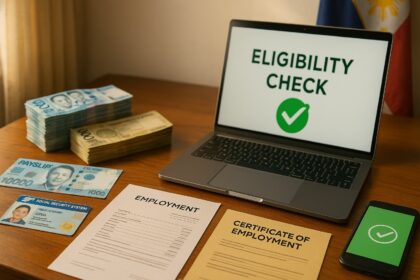


A salary loan is one of the most popular financial products in the Philippines, designed to provide employees with quick access to cash when they need it most. Whether it’s for medical emergencies, tuition fees, home repairs, or everyday expenses, a salary loan (locally called pautang sa sahod) can be a lifesaver.
In this article, we will explain everything you need to know about salary loans: how they work, who can apply, the best options in the Philippines, and whether it’s the right choice for you.

Definition of a Salary Loan
A salary loan is a type of short-term loan where an employee borrows money against their monthly salary. This means the repayment is deducted directly from future paychecks, making it easier for borrowers to pay on time.
Key Features of Salary Loans
- Fixed repayment terms (usually 3–24 months)
- Lower interest compared to payday loans (utang online)
- Automatic payroll deduction
- Available from banks, government agencies, and online lending apps
Salary loans are structured to ensure borrowers can repay without heavy financial strain. Here’s how the process usually works:
- Application – The employee applies through their employer, bank, or lending app.
- Approval – Lenders check employment status, income, and credit history.
- Disbursement – Loan proceeds are credited to the borrower’s bank account.
- Repayment – Monthly amortizations are automatically deducted from salary.
💡 Example: If you borrow PHP 20,000 with a 12-month term at 12% annual interest, your monthly repayment would be around PHP 1,800.


Where to Get a Salary Loan in the Philippines
1. Government Salary Loans
- SSS Salary Loan – Available to active SSS members with at least 36 contributions.
- GSIS Salary Loan – For government employees.
2. Bank Salary Loans
- BDO Personal Loan
- BPI Salary Loan
- Metrobank Cash Loan
3. Online Lending Apps (Fast Approval)
- Tala Philippines
- Cashalo
- JuanHand
- Digido
👉 See also: Online Loans
Eligibility Requirements for Salary Loans
General Requirements
- Filipino citizen, 21–60 years old
- Regular employment (usually 1 year or more)
- Minimum monthly income (varies by lender)
- Valid IDs and proof of income
Documents Needed
- Company ID
- Payslips (latest 1–3 months)
- Certificate of Employment
- Government IDs (UMID, TIN, PhilHealth, etc.)
Advantages and Disadvantages of Salary Loans
Pros
✅ Fast approval compared to other loans
✅ Lower interest than payday loans
✅ Convenient repayment through salary deduction
✅ Improves credit history if repaid on time
Cons
❌ Limited to employed individuals
❌ Loan amount depends on salary level
❌ Risk of over-borrowing if multiple loans are taken
Salary Loan vs. Other Loan Types
| Loan Type | Typical Borrowers | Interest Rate | Repayment | Speed of Approval |
| Salary Loan | Employees | 10–20%/year | Payroll | 1–5 days |
| Payday Loan (utang online) | Anyone with ID | 10–15%/month | Lump sum | Same day |
| Personal Loan | Employees & Self-employed | 8–18%/year | Monthly | 3–10 days |
👉 See also: Debt Management
Tips Before Applying for a Salary Loan
- Borrow only what you need – Avoid unnecessary debt.
- Compare multiple lenders – Interest rates and fees differ.
- Check your company’s tie-ups – Some employers have partner banks with lower rates.
- Read the fine print – Watch out for hidden charges.
- Pay on time – To maintain a good credit score.
FAQ – Salary Loan in the Philippines
1. Who is eligible for a salary loan?
Employees with regular employment status and a stable monthly income are usually eligible. Government employees can apply through GSIS, while private employees can apply via SSS or banks.
2. How much can I borrow with a salary loan?
Loan amounts depend on your salary and lender policy. Typically, you can borrow 1–2 times your monthly income. For SSS loans, the maximum is up to PHP 30,000.
3. How fast is the approval?
Approval can take 1–7 working days for banks and government loans, but online lending apps may approve within 24 hours.
4. What happens if I lose my job during repayment?
You will still be required to repay the loan. Some lenders may restructure the repayment plan, but it’s best to inform them immediately.
5. Is a salary loan better than a payday loan?
Yes. Salary loans have lower interest rates and longer repayment terms, making them safer and more manageable.
6. Can I apply for multiple salary loans at once?
Technically yes, but it’s not advisable. Having multiple salary deductions can strain your budget and increase the risk of default.
7. Do salary loans affect my credit score?
Yes. Timely repayment improves your score, while missed payments negatively impact it.
Conclusion
Salary loans (pautang sa sahod) are a reliable way for employees in the Philippines to access fast cash for emergencies and personal needs. They are safer and more affordable compared to payday loans, provided you borrow responsibly and repay on time.💡 Call to Action:
Compare the best loan apps in the Philippines →